1449 search results - page 167 / 290 » Self-Randomized Exponentiation Algorithms |
193
click to vote
CRYPTO
2011
Springer
14 years 6 months ago
2011
Springer

Very few public-key cryptosystems are known that can encrypt and decrypt in time b2+o(1) with conjectured security level 2b against conventional computers and quantum computers. Th...
335
click to vote
Publication
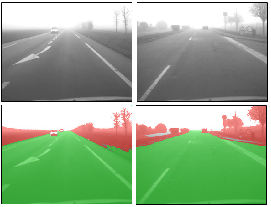
In adverse weather conditions, in particular, in day-light fog, the contrast of images grabbed by in-vehicle cameras in the visible light range is drastically degraded, which makes...
386
click to vote
Presentation
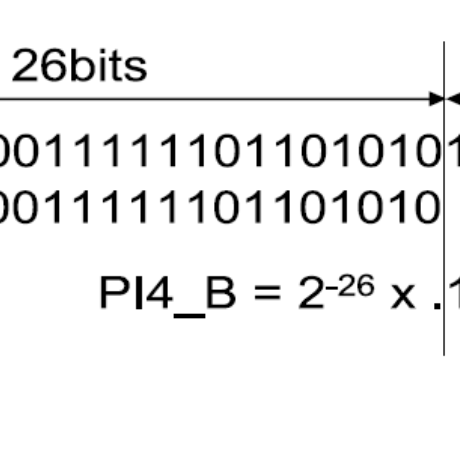
Data-parallel architectures like SIMD (Single Instruction Multiple Data) or SIMT (Single Instruction Multiple Thread) have been adopted in many recent CPU and GPU architectures. Al...
181
click to vote
ICML
2009
IEEE
16 years 7 months ago
2009
IEEE

A new "herding" algorithm is proposed which directly converts observed moments into a sequence of pseudo-samples. The pseudosamples respect the moment constraints and ma...
151
click to vote
STOC
2002
ACM
16 years 6 months ago
2002
ACM
Two infinite walks on the same finite graph are called compatible if it is possible to introduce delays into them in such a way that they never collide. Years ago, Peter Winkler a...