6412 search results - page 908 / 1283 » Human Active Learning |
164
click to vote
BMCBI
2010
15 years 6 months ago
2010

Background: We analysed 48 non-redundant antibiotic target proteins from all bacteria, 22 antibiotic target proteins from E. coli only and 4243 non-drug targets from E. coli to id...
174
click to vote
BMCBI
2010
15 years 6 months ago
2010
Background: Complex human diseases are often caused by multiple mutations, each of which contributes only a minor effect to the disease phenotype. To study the basis for these com...
164
click to vote
JOCN
2011
14 years 9 months ago
2011
■ Humans commonly understand the unobservable mental states of others by observing their actions. Embodied simulation theories suggest that this ability may be based in areas of...
163
click to vote
CVPR
2007
IEEE
16 years 8 months ago
2007
IEEE
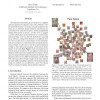
Automatically determining facial similarity is a difficult and open question in computer vision. The problem is complicated both because it is unclear what facial features humans ...
159
click to vote
HRI
2010
ACM
16 years 1 months ago
2010
ACM
— This conceptual paper broaches possibilities and limits of establishing psychological intimacy in HRI. Keywords- human-robot interaction, interaction patterns, social and moral...